
VAMPY BIT ME
Interview by David Cirone
Part 1 – March 20, 2026
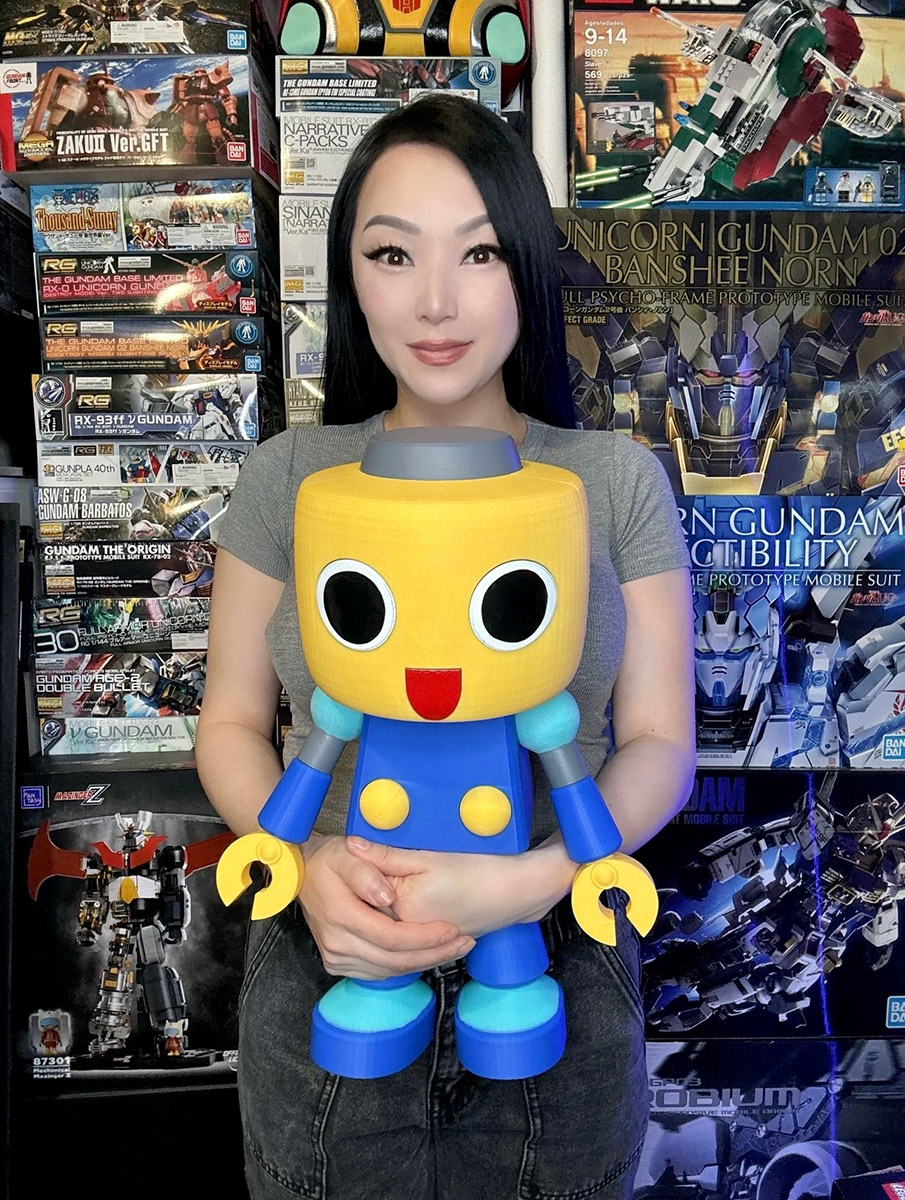
Linda Le, known professionally as Vampy Bit Me, has built an international fan following the hard way — by being herself. Transitioning from cosplayer to brand ambassador, her seemingly non-stop schedule has positioned her as a leading member of Japanese pop culture fandom. She remains focused, opinionated, and unfiltered as she engages with her steadily-growing community through social media and livestreams.
In Part 1 of this exclusive interview, we talk about her lifelong involvement with video games, comics, and model-building, as well as her mission to inspire the next generation of cosplayers. She reveals the truth about finding her identity, the challenges of growing up as a nerdy girl, and why she really broke her brother’s Transformers.
(Note: We conducted this interview right after a recent marathon Twitch stream where she premiered her latest cosplay project, Tron Bonne from Mega Man. — check out Part 2 of our interview to see the final result.)
I was able to watch the first part of your Twitch stream yesterday, and I didn’t realize you were going to be on for eight hours straight.
Vampy: When Twitch gives you a front page spot, you have to be on the whole time, so I chose my hours to go from four to twelve. And I usually prep for one hour. A lot of my community are in IT, so I’m just like, “Uh, can I ask you guys a question? I’m going to use you guys for sound check.” We’re really close. It’s super cute.
How do you keep your stamina up for that long?
Vampy: Streaming is awesome because it’s all about what you want to make it. I love talking about the projects I’m working on, or just having a conversation about the things my viewers and I are interested in. After doing this for so long, it’s become second nature.
In the section I watched, you were talking about using different fabrics to create costumes and the advantages of constructing and traveling with neoprene. And when the chat started asking you questions, your eyes instantly lit up. “Oh, do you guys want to talk about fabrics? Can I nerd out about sewing?”
Vampy: I love sharing what I know. I feel like the internet is beautiful in that way. Everyone is constantly learning now and evolving, and that’s the kind of interaction I wanted when I was a kid, when I needed help. I only had my Mom and Dad to ask about sewing back in the day.
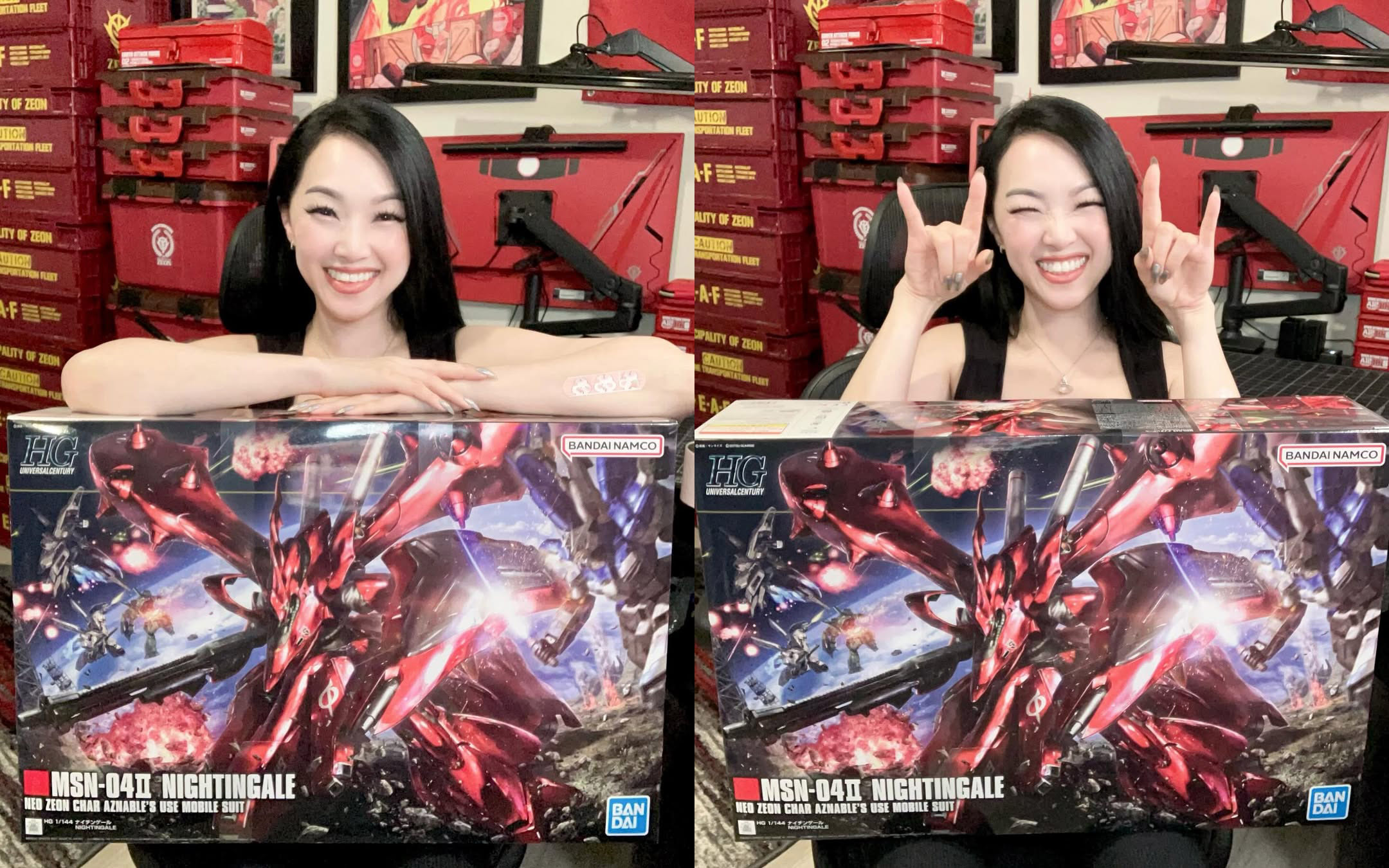
How many times a week are you on Twitch?
Vampy: I try to stream at least three to four times a week if I’m not involved in other projects. What’s good about streaming is that it’s at home. I’m going to do this stuff anyway. But the big difference is, obviously, I’m talking. And I really love helping people. So when people come in and they have questions about what I do or how to get there, I love being able to answer them.
I’ve seen that interaction in your streams. If you’re building a model, they get super-specific about technique and materials, or if you’re talking cosplay, they want your advice about all aspects, from pro-level to just doing it as a hobby.
Vampy: I just love being able to give advice, because I think sharing my experience can help someone else. I also think the industry can only grow if we’re honest about the ups and downs of it. I try to be as transparent about that as possible.
Most people know Vampy Bit Me as a cosplayer. Now you’ve evolved in so many different directions — you’re a cosplayer, a streamer, a builder, an event host, sometimes a contest judge. How do you prioritize your professional life now? What takes up the most of your time?
Vampy: That’s a funny question. Whatever takes up my time nowadays is whatever I feel like doing. When I first started out, it was really hard to make a name for myself because I didn’t really set out to do this professionally. Coming from a professional styling background, I definitely thought it was another way to showcase my fandom. Back then, there was no career in what I did. Costuming and cosplay were definitely just for fun at the time. But the longer I did it, the more people wanted to pitch me ideas about working together, especially game companies. I’d never had that happen to me before! Living in the Bay Area, which is really tech-driven and business-oriented, getting noticed for something creative was very odd, because none of my friends did it. There was a structured way of living — go to college, get married, have a family, buy a house, all of those things. I personally think that’s amazing for them. All my friends have that life and I respect it. But it wasn’t for me. So this path was a strange choice for me, but I made it into a job and it was by happenstance.
Cosplay comes from fandom, and fandom connected me to others who became my best friends. It was like a language for me. It was speaking without speaking.
Was it scary not having a set path or any kind of example?
Vampy: I don’t usually get scared about trying new things. I think its necessary to grow, and experience only makes you stronger. Cosplay was definitely a huge part of my life, and I got to travel the world doing it. During the pandemic, I started thinking, “Well, I can’t do cosplay forever.” I love making things, but I wanted to show more of who I was. Now, in these livestreams and public events, I can show more of my personality. Back then I rarely talked, only in interviews. Besides that, I’ve always wanted to host because I loved uplifting other people. And I’ve become more involved in production, so I’m behind the scenes now, too. That’s become a big part of my focus.
Do you feel like you’re in a “mentor” role now?
Vampy: After almost 20 years, I’m able to give advice to others who may want to seek out a career in what I do. I think it’s a mindset as well. I just love being able to show people how I do things. My parents taught me at an early age that without structure, there is no future. When I was little, I would work at their VHS rental store every weekend, and on the side I would play the arcade games they had there. But even at an early age, I was pretty mature, and I learned how to talk to customers, too. My dad would say, “Oh, she’s a little businesswoman.”
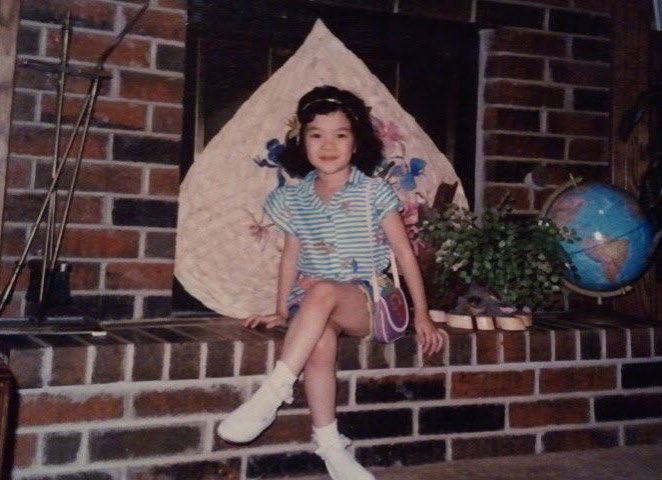
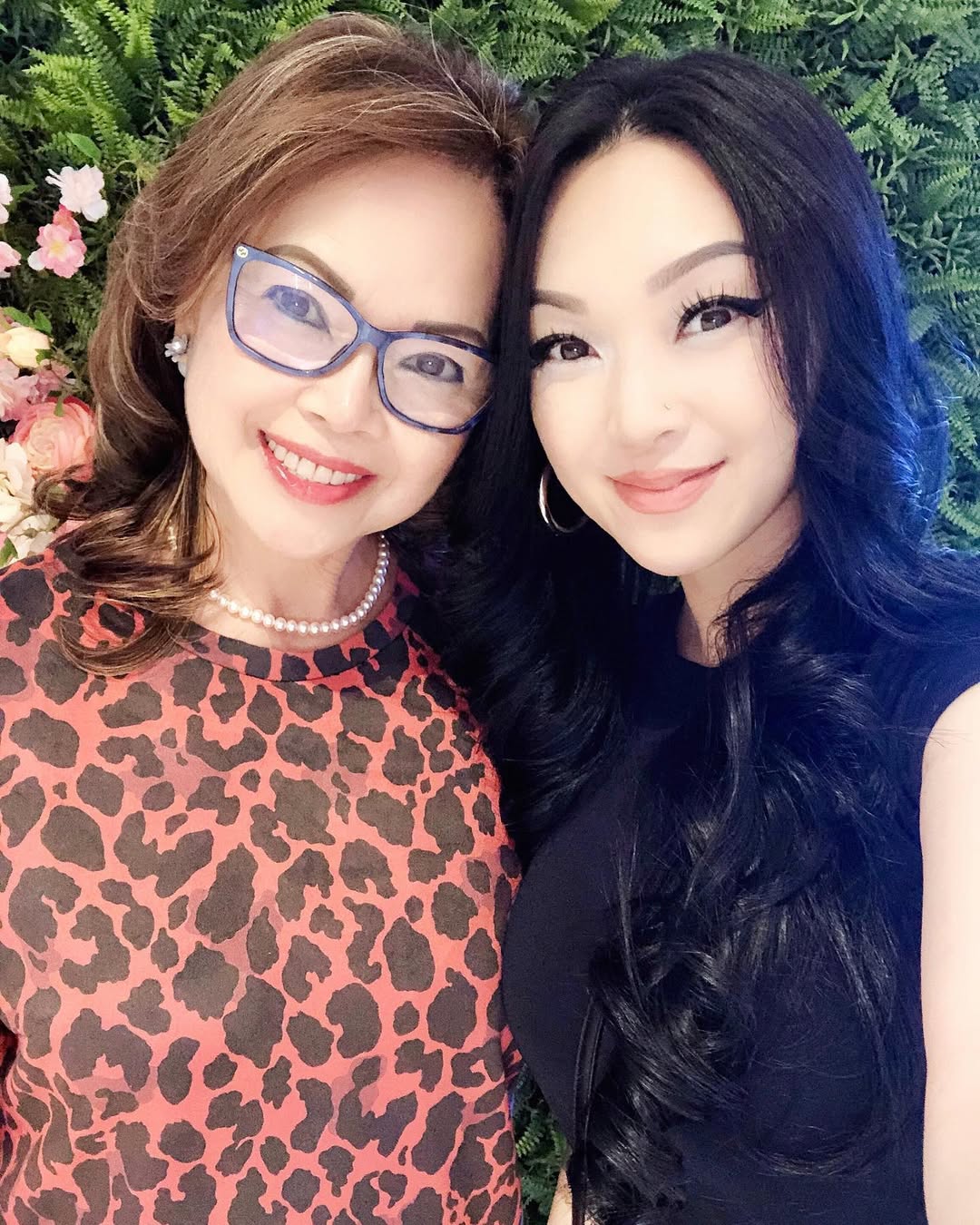
So even as a child, you’re learning how to have fun but stay focused when you need to. You carried those lessons into what you’re doing now.
Vampy: I’ve been this way my whole life, so it’s kind of weird how that led me into a creative field. I’m an introverted person, but I love creative people. Cosplay comes from fandom, and fandom connected me to others who became my best friends.
It’s hard to imagine you being introverted. You always seem super-ready to engage with people.
Vampy: It was like a language for me. It was speaking without speaking. If I wore something from a comic book and someone recognized it, they understood me without saying anything. As a person who was insanely shy back then, cosplay was great because I didn’t have to talk. Now, though, I’ve trained myself to be more outgoing. I don’t need the cosplay to make connections. Cosplay has taught me a lot about myself and others.
In yesterday’s live stream, you’re just wearing a simple T-shirt. You’re very casual. You’re not dressing up in a revealing costume just to draw in viewers. It feels like the people are there to participate in something with you, not just gaze at you.
Vampy: Thank you. I really appreciate that, because all I really wanted was to connect with somebody. Growing up as an Asian-American in Oklahoma, we didn’t have a chance to have friends or express ourselves in any unique way. There was a predetermined idea of us already. So when we moved to the Bay Area, I started having some sense of self. That’s kind of a crazy thought, because nowadays people say, “Just be yourself.” Back then it wasn’t like that. You weren’t allowed in certain spaces if you weren’t deemed good enough, even nerd spaces. If you go to the comic book shop and you’re not a regular, they would say, “Is this for your brother, or your boyfriend?” It was hilarious now when I think back about it. This was back in the early 90s when I used to go to a comic book shop every week on new release day.
In school, I was in a marching band, and did track and field, but my true passion was always comics toys and cartoons. I would go to the comic book shop after practice, and they’re looking at me strange. “Comics? That’s such a boy thing to do.”
There are so many stereotype jokes about a girl walking into a comic book shop. It’s much more normalized now, but back then, it was shocking. You were either an object of beauty, like “Hey, there’s a girl!”; or you were an intruder, like “You don’t belong here.”
Vampy: I was a sixth grade kid, walking in after school, and no one talked to me. In school, I was in a marching band, and did track and field, but my true passion was always comics toys and cartoons. I would go to the comic book shop after practice, and they would say, “Why would you go there?” I would say, “No, I like reading.” And they’re looking at me strange. “Reading what? Comics? That’s such a boy thing to do.” In the 90s, they definitely called it a boy thing. All the marketing you’d see on TV back then was either a “girl toy” or My Buddy, which was for boys. It was very much separated by the sex of the person. A lot has changed.
Because–
Vampy: That’s for boys! And if you’re a Rainbow Brite girl, you’d better only be playing with Rainbow Brite and Jem and the Holograms. You know, you just don’t touch the boy stuff like G.I. Joe. You don’t touch it.
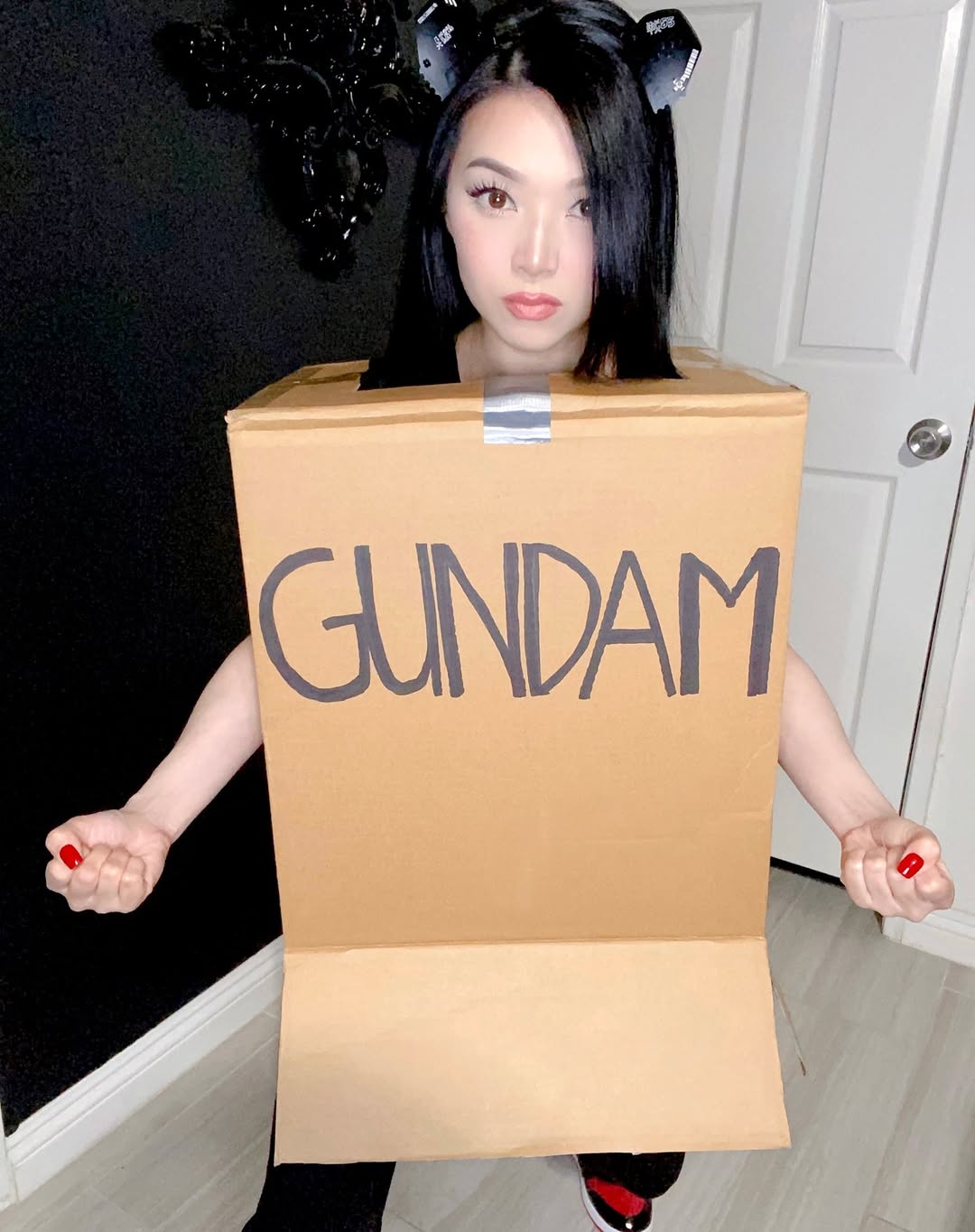
You’ve talked about your mom and you putting together costumes made from cardboard, just little blocky robot-shaped stuff. How old are you when this is happening?
Vampy: My dad is an engineer, but before he was engineer, he paid his own way through school being a janitor. Then he eventually became the top engineer at IBM, insanely smart. And my dad would say, “You know what? You’re my daughter. We can’t buy all these toys, so I’m going to make you stuff out of this cardboard and make it look nice.” Because he’s an engineer, he can make anything. He and my mom, they’re people who make things. They’d work together to make me things like dollhouses or robots. I’m around five years old.
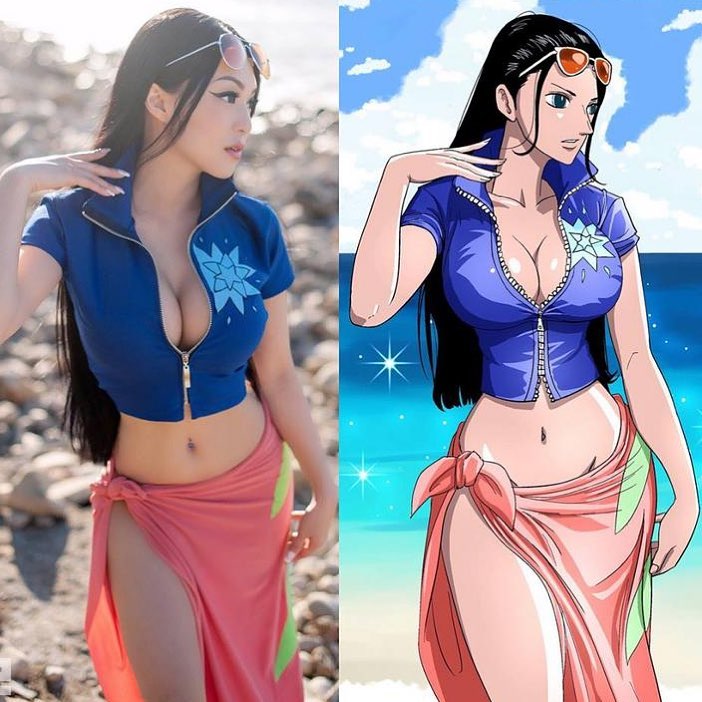
How does five-year-old young Asian female Linda decide, “I want to do Transformers”?
Vampy: Because back then, there were just robots everywhere. Transformers, Voltron… a bunch of those 80s shows had robots. And my cousins showed me Japanese super robots from the 70s, and I thought they were cool, too.
Did you go to the movie theater and watch Optimus Prime die?
Vampy: Yeah! And that traumatized me. Oh my God, I’d never seen something so traumatizing. See? I’m stuttering. I still don’t like it at all, because it’s something that you’ll remember forever. That’s your hero and then he dies, in such a graphic way? How can you make that better? You don’t.
For a child, that’s so emotional. You’re not separating it as just fiction.
Vampy: It’s like watching the Ninja Turtles in live action for the first time. “Whoa, they’re real!” I’m a huge Ninja Turtles fan and I freaking love them. Being able to live throughout the movies and the shows and all that Ninja Turtles stuff really shaped my childhood. I was the stereotypical millennial, one million percent. I was always asking to go to Pizza Hut and buy Ninja Turtles toys at the store. In second grade, we had a day where we shared our favorite books, and mine was a Ninja Turtles book I had from home. It was my life.
Can you draw a direct line from making your homemade Transformers outfit to your lifelong love of Gundam?
Vampy: Oh, yes. I was maybe nine years old, and I was diving more into anime at that time, watching Evangelion and all that stuff. My parents would sometimes pay me a few bucks, and I would save my money. KB Toys had Gundam, and being from Oklahoma, I’m not used to anime stuff being in the mall. I thought it was all really weird. “Why does this Gundam look different?” I saw the Japanese writing on the back, and it said “Made in Japan”. At that time, I was still learning about the world. Transformers was already being broadcast in America, so at first glance, I thought this Gundam must be American.
Growing up, my dad always took things apart and fixed them in front of me. I broke my brother’s Soundwave when I was a kid. “I’m trying to see how it’s built!”
You thought it was “weird”, but it sounds like you were the perfect customer.
Vampy: I was obsessed. I’m thinking, “Gundam is actually really cool because you build your own. You don’t just play with them, you build them.” Growing up, my dad always took things apart and fixed them in front of me. I broke my brother’s Soundwave when I was a kid. I took it apart and my dad said “No! No! You don’t take this apart!” My brother was so pissed at me, but I said, “I’m trying to see how it’s built!” I knew I had to find something else to do, because my brother was going to kill me for breaking that Soundwave.
So you’re nine years old, building your first Gundam?
Vampy: I was eight or nine. Maybe even younger. I moved around a lot when I was a kid, so I don’t remember my exact age at the time, I just know I was very young.
Do you remember which one was your first?
Vampy: I got the SD Knight Gundam and a BB Senshi. They were gifted to me, and they were really cheap and small and weird, and I felt like, “I don’t want this.” And I just threw it. I thought, “You’re giving me junk. I play with Transformers — how dare you?” So I wasn’t interested at all until I went to the store and saw my first High Grade. “What is that? Why does the box look so nice?” And it was affordable. I could tell my parents to get me this, because the Ninja Turtles were $4.99 at Target, but I can get a model kit for nine bucks!
The engineering genes are kicking in.
Vampy: I was a daddy’s girl, and my two brothers were big nerds. It was hard being the only girl and being into this stuff. I had no friends at school that were into it and I didn’t want to be friends with a bunch of guys who didn’t like girls in their hobby (this was the stigma in the 90s), I wanted to make friends with girls. But they didn’t understand me. They accepted me, but only for things like dancing or sports. I was in track, I played volleyball I was in band so I was accepted in certain things. But not for my nerd stuff.
I grew up in a Vietnamese household. A lot of women in my culture are very strong, mentally. So, for me, Psylocke was like the embodiment of my culture.
And this nerd stuff leads you to cosplay, with characters like Psylocke.
Vampy: At that time, I’m engrossed in comic books and in love with Jim Lee’s artwork. That era of X-Men was influential in my life, because it gave me a lot of power, being a nerd and feeling like an outsider. I loved the energy of those characters like Storm, Nightcrawler, and Psylocke, and I wanted to show my love in my particular way, as a cosplayer. I wanted to cosplay every Psylocke that I read. I’ve always been pretty strict with myself about making sure that I liked the character before I wore the costume.
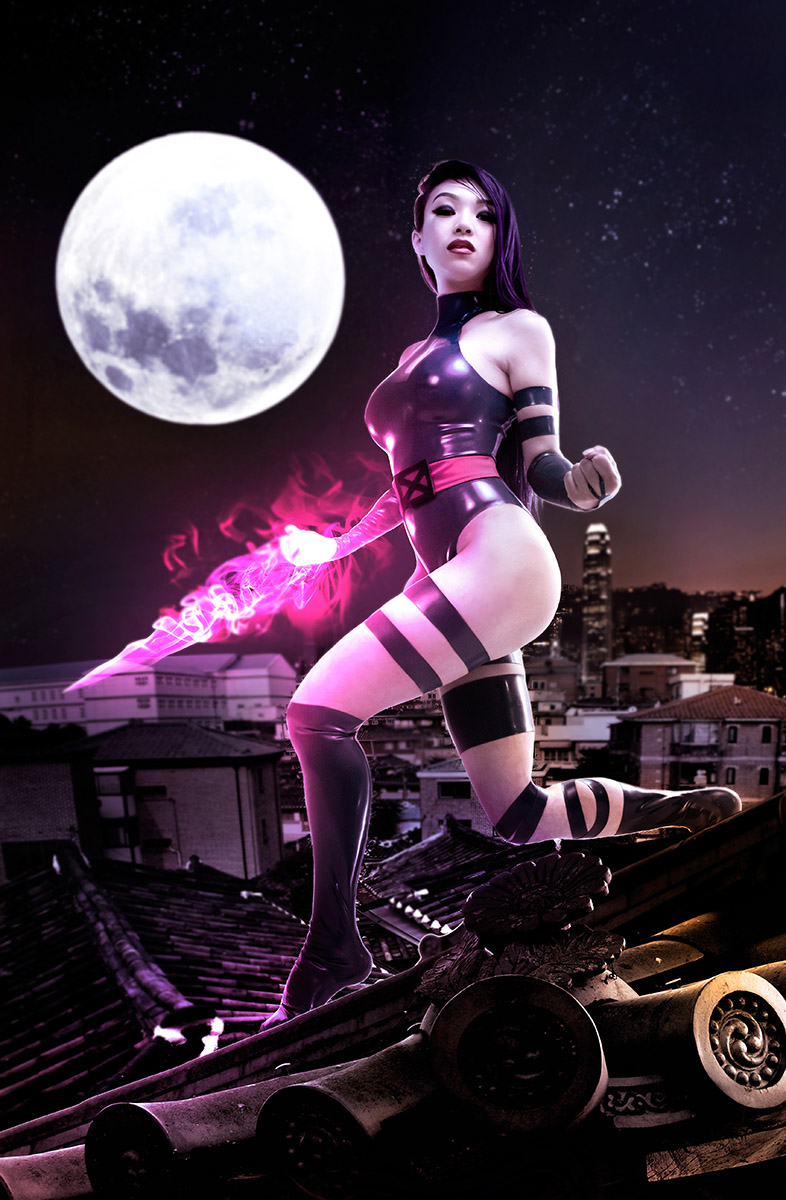
Psylocke has become one of your legendary cosplay performances. What drew you to this character, specifically?
Vampy: I would love to have her powers! I loved her powers and I loved her attitude — the way she projected herself. Because not only was she beautiful, but she was strong, too. I grew up in a Vietnamese household. A lot of women in my culture are very strong, mentally. So, for me, Psylocke was like the embodiment of my culture. Of course, she wasn’t the same ethnicity as me, but that didn’t matter at all. My mom was a very strong woman, and that clicked with me right away — the power of her mind, her telepathy. So I loved her. “That’s so cool. I wish I could do that.” She really motivated me. Another favorite above her is Storm.
Have your cosplay activities drifted more toward anime and video game characters lately? In yesterday’s stream, you announced your next project is Tron Bonne from Mega Man. Is that a reflection of your focus as a fan, as a gamer?
Vampy: I’ve always been into video games, my whole life. My first game was Zelda, the gold cartridge, on NES. Even before comic books, I was playing Ninja Turtles at the house in Oklahoma. I can recite every NES game soundtrack because that was my in my veins. Now that I’ve established my career, I can knock out the things I really love, like the Castlevania cosplays or Mega Man. Back then, I didn’t have enough skills. That’s why you see me do a lot of the game stuff, because now I know how to do it. It takes time to learn, you know? And I had to teach myself. In between my work time, I’m always watching videos and practicing. So now my next goal is helmet wigs.
For each of your cosplay outfits, you have your planning book, and you’re going to do two or three fabric tests before you get to the main one. It’s very methodical. Do you have to be able to make your own costumes to be considered a good cosplayer?
Vampy: I would say not anymore. Back then? Somewhat yes. You were judged if you didn’t make the majority of it yourself or if it’s not all handmade. That’s why you see cosplay competitions still heavily affected by that standard. Those are the rules the judges grew up on. Also, the meaning of cosplay has changed in social media. I like the direction that it’s taking, since there’s more inclusion. I personally think it’s 100% fine to commission cosplays, to buy them, or just wear clothes that look like the characters. Cosplay is what you make of it, it’s showcasing your fandom. Not a competition. It’s all about passion for cosplay and I think that’s awesome. There are so many ways people express their fandom. Some people cosplay and do skits, some people make tutorial videos. There’s a lot to see when it comes to skill in cosplay now, and I think we should celebrate how far the scene has come.
Besides a costume, what other qualities does a professional cosplayer need to have? Is it performance, attitude?
Vampy: I think number one is attitude because, as a cosplayer, you’re performing. And also, it’s important to have grace. Having grace, humility, and being part of a community in a way where you’re representing that community in the best light. As a cosplayer, you’re creating some sort of art performance, right? You need to have some kind of dignity connected to that. When you’re part of the Monster Hunter community, the Evangelion community, or the Gundam community, it all matters because you’re representing something bigger by wearing a costume from a series. You’re part of the fandom, an important part, so you have to represent the fandom in a positive way — because it was positive to you when you discovered it. That’s why you love it. Cosplayers represent a different form of love. Some people are fans, and they show their love by watching and celebrating a series. We’re the same, but we just make things.
READ PART 2 of our interview here, where Vampy dives into her love affair with the Monster Hunter frianchise and reveals her plans for the future,
VAMPY BIT ME
Instagram: https://www.instagram.com/vampybitme/
Twitch: https://www.twitch.tv/vampybitme
X: https://x.com/VampyBitme
Facebook: https://www.facebook.com/VAMPYBITME/