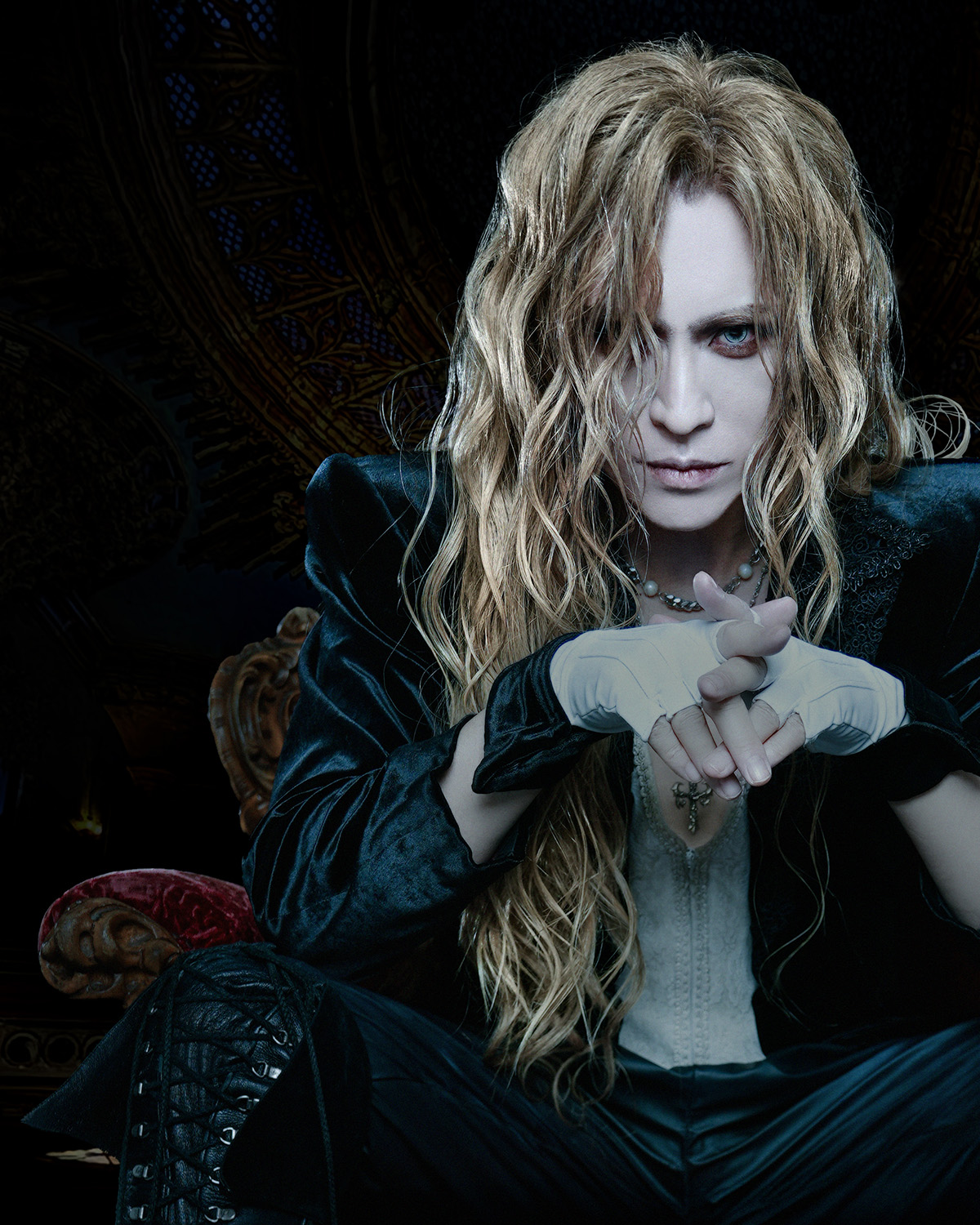

KAMIJO
Interview by Molly Coggshall
February 25, 2026
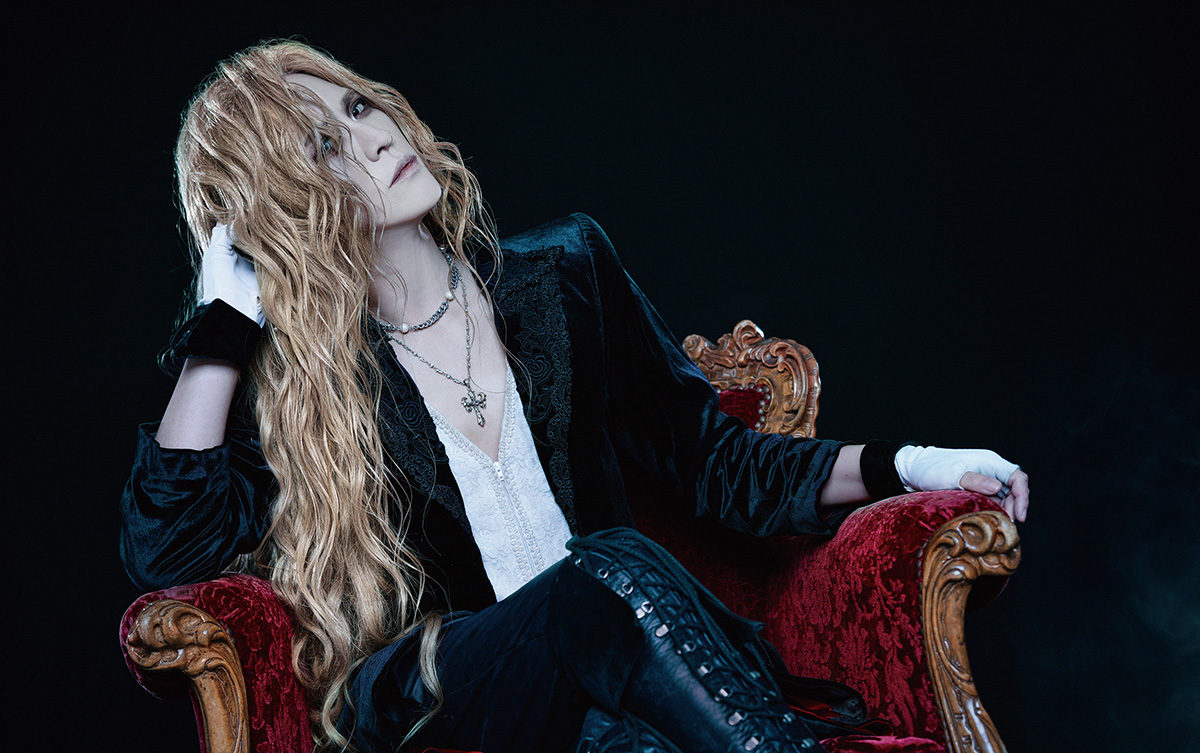
KAMIJO has built a career combining visual artistry, complex orchestration, and bold fashion aesthetics to create a persona that has become legendary among Japanese music fans. Leading the symphonic metal band VERSAILLES, and then embarking on a successful solo career, KAMIJO has defied the limits of visual kei to become a multi-genre artist admired by a global audience. In this exclusive interview with J-Generation, the musician and composer speaks frankly about his artistic ambitions, facing new challenges in his move to Los Angeles, and the concepts behind his upcoming U.S. debut show SANCTUS OF THE DAMNED this July.
SANCTUS OF THE DAMNED will be your debut live concert following your relocation to Los Angeles. What’s the inspiration behind the title of this show?
KAMIJO: The title “SANCTUS OF THE DAMNED” embodies exactly where I stand right now. “Sanctus” signifies something sacred, a blessing, a prayer. “Damned” refers to one who has fallen, a cursed existence. At first glance, they’re words positioned at opposite extremes. Yet I believe I have always been an artist who stands between those two poles. The culture of visual kei has always been regarded as heretical, and – at the same time – it’s an art form that pursues beauty to its absolute limits. Cloaked in darkness while seeking the light. That very contradiction is my essence. Relocating my base to Los Angeles is, in a sense, both a “blessing” and a “trial”. To confront everything from zero in a foreign land is not a gentle or easy challenge. The evaluation becomes more severe, and the language and culture are different. The version of myself who stands there may, in some respect, be “damned”.
Your upcoming concert at the United Theater and your previous L.A. show at The Mayan Theater are both set in beautiful venues with ornate, gothic design. How does this type of setting enhance your performance and create a special experience for fans?
KAMIJO: Both the United Theater and The Mayan Theater are striking venues. They’re really defined by the grandeur of their ornamentation and architecture – the designs on the ceilings and the intricate details along the walls bear the imprint of time and history. When I stand within such a space, I can feel the atmosphere shift even before a single note is played. My performances are always centered around the “original work” that exists in my mind. For that reason, a venue with a strong sense of narrative allows for a more natural immersion than a sterile, neutral space. The moment the lights fall, the audience itself becomes part of the stage. That sense of unity is something unique to theaters like these. For the fans as well, it will not be merely a concert, but an entrance into the extraordinary. From the instant they pass through the doors, time is severed from everyday reality. The architectural beauty supports and deepens that immersion. A beautiful venue elevates the performer, yet it’s also demanding. One must deliver an expression worthy of the space. That is precisely why each moment becomes more refined and sharpened. I believe that tension is what gives birth to a truly special experience.
From the very beginning, I compose with the orchestra as a given…it’s a question of how fully I can realize the scale of my ideal. The orchestra is not ornamentation – it is the language itself through which the story is told.
Your music has evolved over the years from melodic visual kei to theatrical storytelling with orchestral arrangements. As a musician and performer, how do you decide what styles to explore?
KAMIJO: In truth, it may be closer to a return to my origin than an evolution. From the very beginning, I compose with the orchestra as a given. I don’t write melodies for a rock band arrangement and then add strings afterward. What first resonates in my mind is the totality of sound, including strings, brass, and choir. The band exists as something that allows the energy at the core of that whole to become visible. So rather than calling it a challenge, it’s a question of how fully I can realize the scale of my ideal. As a musician, it means pursuing the inevitability of melody and harmony. As a performer, it means expanding that musical world into the space itself. It’s not so much about deciding on a style, but about how precisely I can give form to the music that exists within me. For me, the orchestra is not ornamentation – it is the language itself through which the story is told.
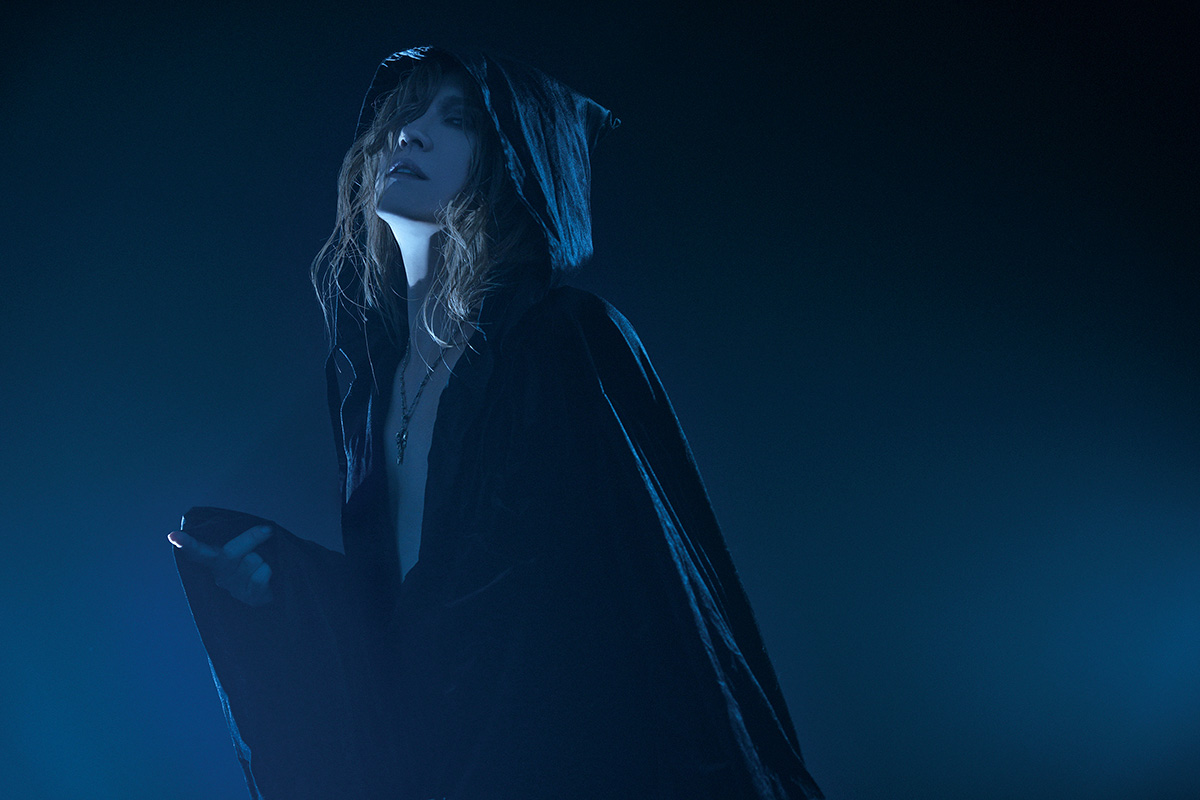
This past summer you held a sold out show at LINE CUBE SHIBUYA to celebrate your 30th Anniversary. How did it feel to perform your previous songs with new orchestral arrangements? What new emotions did you discover?
KAMIJO: Standing on that stage at the milestone of my 30th anniversary wasn’t merely a celebration. It felt more like a ritual of reconstructing the time I have walked through. Presenting songs I have cherished over the years in new arrangements wasn’t an act of denying the past. Rather, I feel that I was able to present the original scale and narrative those works always possessed in a purer form. What I felt most strongly was not nostalgia, but conviction. A realization that I had been trying to depict this world from the very beginning. What I newly experienced wasn’t the weight of time, but the continuity of time. Thirty years is a significant number. Yet within music, past and present are seamlessly connected, all joined together as a single story. That performance wasn’t meant to look back on the past. I believe it was a stage meant to show how far I can continue to expand my own aesthetic from here forward. That is why the sold-out show that day was a result, not the objective. For me, it was a quiet night of resolve before stepping into the next chapter.
You recently moved your base of operations to Los Angeles and established CHATEAU AGENCY Hollywood Inc. Why is Los Angeles the perfect place to start this new chapter of your career?
KAMIJO: The reason I chose Los Angeles wasn’t simply to expand overseas, or merely about changing my environment to seek new stimulation. I wanted to change my own resolve. Until now, I have performed live all over the world, but those were tours, expeditions. My base was in Japan, and overseas was a stage for challenge. However, if I am truly to move into the next chapter, I felt that challenge must not remain temporary. It must become my everyday reality. Los Angeles is the center of entertainment, and at the same time it’s an intensely competitive city. In an environment where titles and past achievements carry no weight, I wanted to test how far my music can truly stand on its own. It was the ideal place to do so. Establishing CHATEAU AGENCY Hollywood Inc. was not simply the founding of a corporation. It was a declaration of intent to plant roots in this land, rather than merely exporting my career. Of course, it’s not easy. The culture and language are different. Evaluation comes directly and without filter. But that very tension is what I need now. Having reached my 30th anniversary, I could have chosen stability. Yet I do not believe the artist KAMIJO is complete. I must continue to fight, eternally.
Los Angeles is the center of entertainment, and at the same time it’s an intensely competitive city. In an environment where titles and past achievements carry no weight, I wanted to test how far my music can truly stand on its own.
Now that you’re based in L.A., what plans do you have to connect with your fans in the U.S. and internationally?
KAMIJO: By establishing my base in Los Angeles, the physical distance has undoubtedly grown smaller. Moving forward, I would like to create more continuous and tangible points of connection. A debut live is something special that will never happen twice. However, from here on, I intend to gradually expand the scale of my live performances. And then there are collaborations. By working together with local artists and creators, I can gain the kind of stimulation I’ve been seeking. I’m looking forward to it.

When you create your fashion concepts for albums and tours, where do you draw inspiration from, and how do you keep your ideas fresh?
KAMIJO: Every album and tour has a central theme and philosophy. Until that original foundation is defined, none of the fashion concepts can be determined. The scale of the music, the era it evokes, its spirituality… as I interpret these elements, I choose the silhouettes, materials, and colors. If the original work is grand and weighty, the structure becomes more architectural. If it’s introspective, the lines grow quieter. Everything derives from that original source. My inspirations come from historical costume, fine art, architecture, religious paintings, and haute couture. However, these are not quotations. They are merely references in the process of giving dimensional form to the original work. What is interesting is that the original source is not always a narrative. It may be the texture of sound, the atmosphere of a certain era, or even a single silhouette itself. At times, fashion itself becomes the original source. The structure or material of a single garment can determine the musical direction. What is essential is that there is always a core. As long as I remain faithful to that core, the expression will not waver.
How did playing with LEGO as a child lead to composing music? What’s the connection? And do you still build LEGO sets?
KAMIJO: When I was a child, I would spend long hours playing with LEGO. It wasn’t simply a matter of assembling pieces instinctively. I enjoyed thinking about how to construct a structure. Looking back, I realize it is very similar to composing music. Composition also begins with an overall design. The theme, the development, the tension and release. I consider where each part should be placed so that the whole can stand. That sensation is essentially the same as when I was building with LEGO blocks. Even if something appears beautiful, it will collapse if the structure is weak. Music is the same. Melody alone is not enough for it to stand. It requires a framework. I no longer own LEGOs, but the habit of thinking in terms of structure that I developed in those days still remains in my creative process. What was once simply “play” ultimately became connected to the way I compose today. When I think about it that way, I feel that those childhood sensibilities were very significant.
How was your experience attending the Grammy Awards afterparty? What are you learning about the music industry in L.A.?
KAMIJO: I felt not so much the scale of it, but its “temperature”. There was certainly glamor, but more than that, I felt a clear sense of purpose among the people there. How one presents one’s work, how one presents one’s value. That awareness was evident in the air itself. Not job titles, but what one is creating now. That attitude left a strong impression on me. What I’m learning from the music industry in L.A., where I’m now based, is its speed and its realism. Evaluations come quickly, and results are made clear. Ongoing activity is valued more than past achievements. There is also a strong culture of collaboration. The barriers between genres are low, and if something is compelling, it intersects. That flexibility is a tremendous source of stimulation. When I’m in an environment like this, I’m calmly observing how far my own aesthetic can truly stand. Among all that glamor, I didn’t feel a sense of exhilaration, but rather a tension, a question of what I can present here.
KAMIJO – The Anthem (MV)
Through studying English, I’ve become more conscious of words as sound. As a result, the range of choices in my lyric writing has expanded.
You often include English in your song lyrics, and you’ve been spending more time studying English. How does this affect your songwriting?
KAMIJO: By incorporating English, the first thing that changes is the rhythm. English has stronger consonants, and the placement of accents is completely different from Japanese. Simply adding that rhythm can cause a melody to be reborn as if it were created by a different person. Japanese is a language that flows smoothly along a melody, whereas English has a sense of landing three-dimensionally against the beat. Because of that, the placement of phrases and the use of space naturally change. Through studying English, I’ve become more conscious of words as sound. As a result, the range of choices in my lyric writing has expanded. A single emotion can be expressed more sharply, or more abstractly.
You’ve posted about some of your experiences in L.A., such as accidentally stumbling into Skid Row and your car breaking down in the mountains. What feelings do you get when you’re exploring this new city?
KAMIJO: To be honest, Los Angeles is by no means a “safe stage”. Stumbling into Skid Row and having my car break down in the mountains were realities one doesn’t encounter as a tourist. But whether those experiences were simply frightening is another matter. It wasn’t that simple. This city has a powerful light, yet its shadows are equally deep. While it stands as the glamorous center of the music industry, it doesn’t conceal the harshness of reality. To experience that contrast firsthand held meaning for me. Stimulation and tension exist side by side at all times. I believe that sensation has, in no small way, influenced my creative work.
What do you want your fans to look forward to when they come see you at SANCTUS OF THE DAMNED? What secrets can you reveal about the show?
KAMIJO: At past overseas performances, there were limitations of time, conditions, and environment. Even in Japan, there have been concepts I was unable to fully realize. This time, it is a special show prepared in order to go beyond those constraints. In the entertainment capital of America, I want to see how purely, and on what scale, the world of KAMIJO can be expressed. I hope audiences will look forward to that challenge itself. It will be a performance that presents the maximum of what I am capable of offering at this moment. Something that could only be made possible in this place. That is what I hope you will experience.
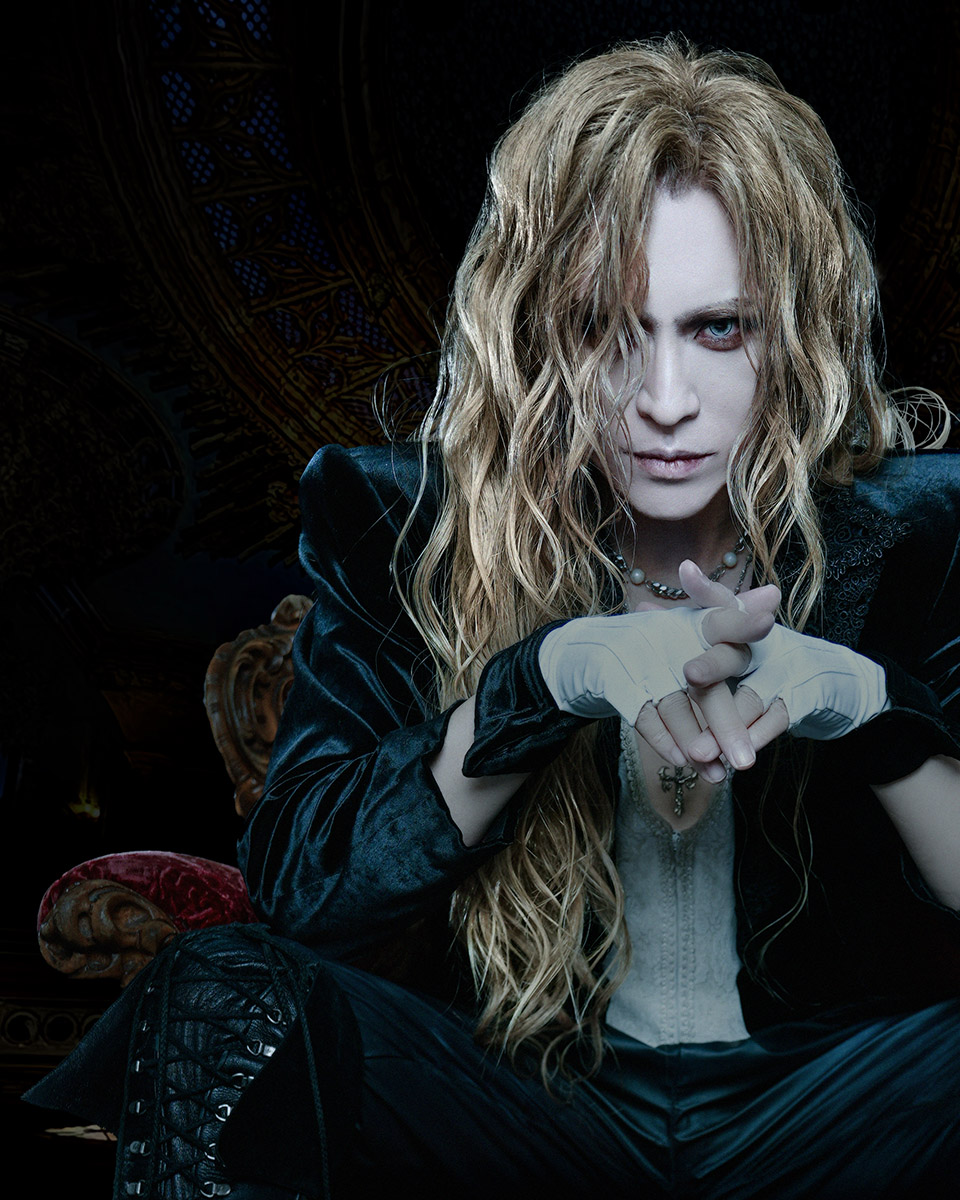
KAMIJO Signature U.S. Debut Show Teaser
Tickets for KAMIJO’s Signature U.S. Debut Show — SANCTUS OF THE DAMNED — are on sale now.
Date: Saturday, July 18th, 2026
Venue: The United Theater on Broadway, Los Angeles
https://www.axs.com/events/1326885/kamijo-tickets
KAMIJO Official Website: https://www.kamijo-official.com
Instagram: https://www.instagram.com/kamijoofficial/
TikTok: https://www.tiktok.com/@kamijoofficial
X: https://x.com/KamijoOfficial
YouTube: https://www.youtube.com/@kamijoofficial